
Manavi Wines
Winery
Not under inspection
Manavi Wines
Estate-grown wines from the Manavi Microzone — Kakheti, Georgia
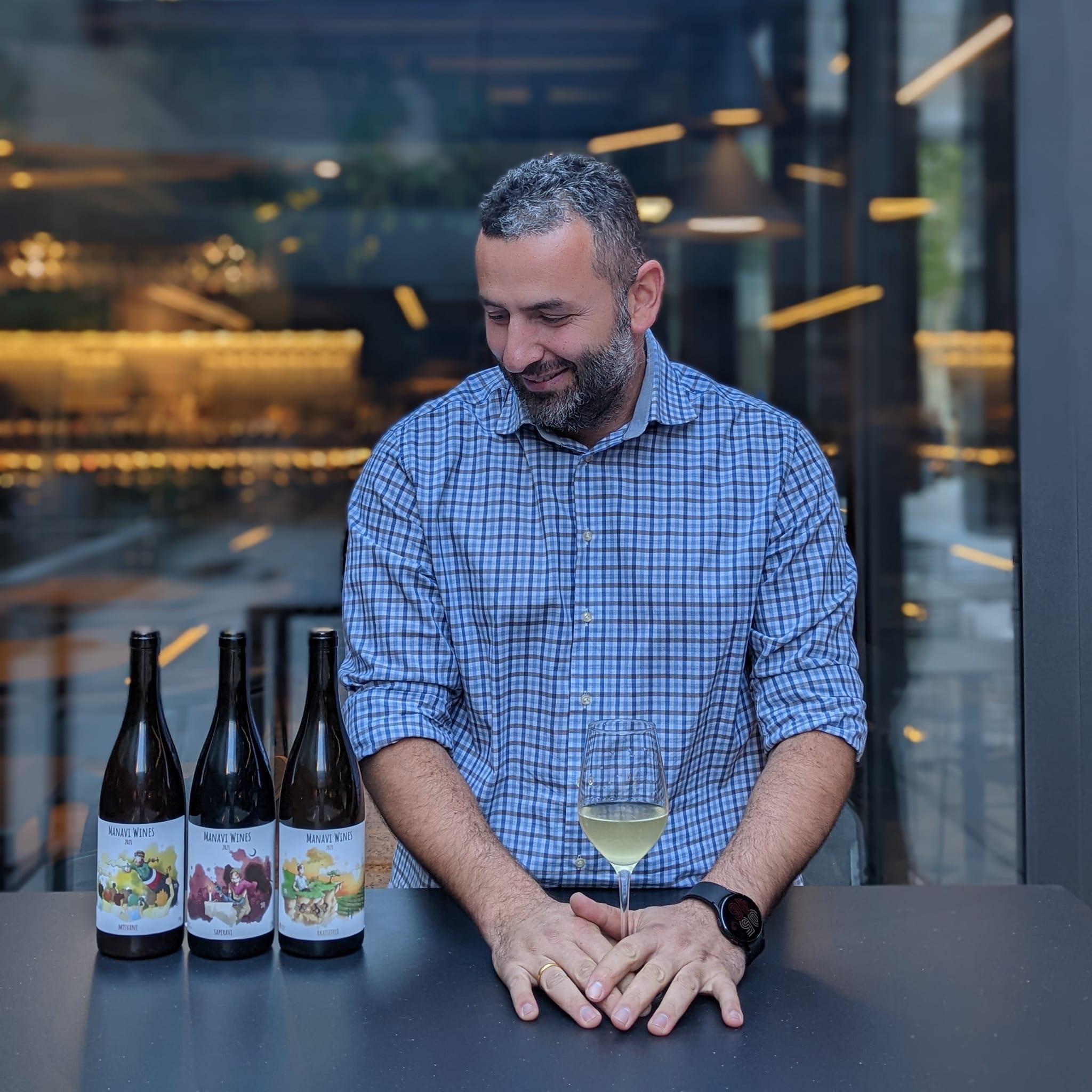
Nestled in the heart of Manavi — a quiet village in eastern Georgia’s Kakheti region — Manavi Wines crafts small-batch wines from a vineyard of just over six hectares, set within one of Georgia’s officially designated microzones (PDO, codified in 1932). On these calcareous, gravel-rich slopes we grow the indigenous Mtsvane Kakhuri — the grape that gives the appellation its name — alongside Rkatsiteli and a small parcel of Saperavi.
Why Manavi?
The Manavi microzone has been protected as a wine appellation since the Soviet era and reaffirmed under modern Georgian law for one reason: the place makes the wine. Three things make this terroir special.
Elevation & aspect
Our vineyards sit on the southern slopes of the Tsiv-Gombori range, at roughly 550–750 metres. Most of Kakheti’s famous appellations — Tsinandali, Mukuzani, Kindzmarauli — sit on the northern, Alazani-facing side of this same ridge. Manavi looks the other way, down toward the Iori basin: more sun, drier conditions, a slightly more continental edge. The ridge to the north shelters us from cold winds; the altitude keeps the nights cool even in high summer, which is why Manavi Mtsvane retains its signature freshness, lift, and aromatic intensity.
Soil
The terroir here is built on brown forest soils with a calcareous (limestone) base and a generous proportion of gravel. The clay holds water and minerals; the limestone gives the wines their backbone and salinity; the gravel forces roots deep. It is the combination Mtsvane was made for.
Climate
A moderately continental microclimate — hot, dry days and cool nights — produces grapes with both ripeness and acidity. The diurnal swing is what lets us make whites of real tension and longevity, including the long-skin-contact amber wines.
Kakheti is the cradle of qvevri winemaking, recognised by UNESCO as Intangible Cultural Heritage. Manavi has been growing wine on these hills for centuries, and we see ourselves as caretakers of that lineage.
Six hectares, thirty-one plots
The Manavi appellation is small. The heart of it — the land considered the appellation’s truest terroir — is only about 53 hectares. Land here has always been held in tiny family parcels, so you cannot simply buy your way in by acquiring a single big estate. To work this terroir, you have to assemble it.
Our just-over-six hectares are in fact 31 separate plots spread across that 53-hectare core. They differ in vine age, aspect, soil mix, and exposure. Farming this many plots is more demanding than tending a single contiguous block — we could buy a much bigger property elsewhere in Kakheti for far less money — but the wine would be something else entirely. Each plot brings its own voice; together they make a wine that could only have come from Manavi. There is no shortcut into this appellation.
In the vineyard
We farm sustainably and intervene as little as possible. Quality over quantity is not a slogan — it’s a yield decision. Every vine is hand-tended; every bunch is hand-picked into small boxes to preserve fruit integrity from row to cellar.
In the cellar
The heart of our winemaking is the qvevri — traditional Georgian clay vessels, one to two tons in capacity, buried in the earth to hold a stable temperature through fermentation and ageing. Native yeasts only, no additives. The ancient form does the work, and the wine purifies itself naturally over months underground.
We pair this tradition with carefully chosen modern techniques where they bring freshness and clarity without compromising character.
The range
Our whites come in two distinct styles. Skin-contact (amber) wines spend up to six months on their skins in qvevri, building structure, depth, and that unmistakable amber hue. Direct-press whites are bright, fruit-forward, and lively. Saperavi anchors our reds, and we also produce a trio of Pét-Nats — naturally sparkling — across all three grapes.
Manavi, Kakheti
+995577997788
Social media